Wednesday, May 16, 2007

Yom Yerushalayim - A Heart of Many Rooms

(to hear a radio recording of IDF troops entering the Old City in 1967 click here )


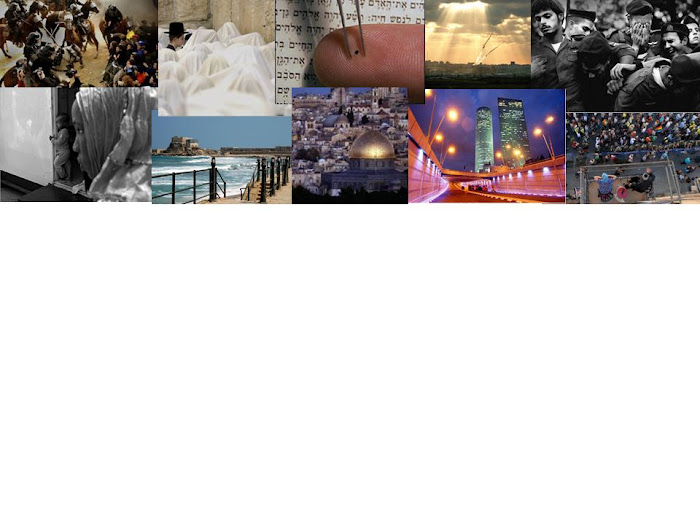
Last year during Ulpan, we were taken on a guided tour of the Western Wall tunnels. Now I’m not the sort of person that gets excited by seeing the closest point to the Holy of Holies but I was still amazed; after all what we believed was the Temple’s Western wall was actually only 10% of it…and now we've discovered the rest! But at the same time I felt uneasy, after all, the opening of the tunnels in 1996 had resulted in bloodshed and riots. We may have been enjoying a spiritual journey in ancient Jerusalem, but there was a political and security price to pay for it.


It is that mixture of simultaneous amazement and uneasiness that pervades me on Yom Yerushalayim. On the one hand is the joy at the liberation of the Old City, the shiver when I hear the words Har Habayit BeYadeinu, the Temple Mount is in our hands, the emotion of seeing paratroopers dancing by the wall, the memory of unadulterated joy by Israelis of all stripes over the miracle that took place 40 years ago, when our people went from digging mass graves to celebrating the liberation of our historical biblical homeland. In short, the amazement of 'seeing' God's hand in history.

But at the same time, its difficult to divorce all that from the political consequences of the war; The fact that for all the rhetoric to the contrary, no viable regional deal can be reached here without compromising on Jerusalem. Or how we talk about our eternal indivisible capital yet most Jerusalemites would never want to even set foot in the Shuafat Refugee Camp (many are too scared to even walk through the Muslim quarter of the Old City).

It’s a day that through no fault of its own somehow turned from being national to nationalist, from being about our ability to pray at the Western wall to banging on Arabs’ doors in the old city.

I haven’t resolved this yet, but it reminds me of my favourite Tosefta text (it didn’t have much competition) that Rabbi David Hartman mentions in the introduction to one of his books.

The Tosefta explains that a person might ask, ‘Since the House of Shammai declare unclean and the House of Hillel clean, this one prohibits and that one permits, how then can I learn Torah?’ The Rabbis answer by advising someone to create ‘a heart of many rooms' into which they should bring the words of the House of Shammai and the words of the House of Hillel, the words of those who declare unclean and the words of those who declare clean.

Similarly today one may ask 'Since Yom Yerushalayim moved from thanking God for saving His people to convincing the police to allow Rabbis onto the Temple Mount how can I celebrate? Since the war marks our liberation yet another people’s occupation how can I take part?'

It’s not easy to hold the idea that our eternal indivisible capital jars with the political and demographic reality that many of our leaders refuse to see. But maybe we all need to build ourselves a heart of many rooms where we can hold all of these things, even if they contradict one another.

Chag Sameach (and don’t forget to say Hallel with a bracha).


and thanks to everyone who spent time voting for this blog in the JIB Blog Awards

Tuesday, May 01, 2007

Yom Hazikaron - Of Three or Four in a Room

3 months into my Hachshara, I told my parents I wanted to stay in Israel for another year and do the army. It wasn’t some sort of opening tactical gambit that would ultimately allow me to continue learning in yeshiva. It was a well thought out position from an ideological eighteen year old who felt that his shared commitment and obligation to Israel shouldn’t allow him to return to a life of parties and socializing in Leeds while his friends were hunkering down in the mud of South Lebanon, to be downing Tequilas as they were downing Hezbollah…

Partly due to my parents wishes (how can an only child give his mother a year of sleepless nights?) and partly to do with my own fears (If even my Israeli friends are telling me I am crazy, do I really need to be chasing danger?) I returned to England 9 months later. Most of the time I try not to think that August ’99 to Aug 2000 was the safest year to be in the IDF or how an extra year in Israel at that age would have changed me. I like to feel like I did some sort of service – that I was active on campus, taught youth about Zionism, worked for the Israeli Embassy, that I made my own sacrifices for things I believe are right.

But as all roads in life not taken, the shadow of the decision sometimes weighs on me.

As Yom Hazikaron approaches, I always feel a tinge of regret.
Its not that I mourn the fact that I don’t have someone close to mourn– in fact I’m thankful for it.

It’s not that I don’t find meaning in the ceremonies; I do.

Its not that I don’t have those to remember; Unfortunately I do.

It’s more that I feel that there’s something missing from my experience of living here – like most people are part of a club whose entrance may be prohibitive, but if you’re not in you don’t really belong.

Yehuda Amichai wrote that


‘Of three or four in a room,
there is always one who stands beside the window.
He must see the evil among thorns…
And how people who went out of their houses whole
are given back in the evening like small change.’

I don’t want to be the person who always stands beside the window and sees evil among thorns. Yet for one day a year, when Israelis unite to remember the fallen – like the kid from high school caught up in the cafĂ© bombing or the inspirational madrich heroically killed saving others or the friend’s older brother killed from friendly fire or the neighbor’s first husband shot in the early hours of the Yom Kippur War – people who went out of their houses whole yet never returned, or saw the horrors of war and came back like small change…I remember too – but my memory is not that of someone in the inner circle.

And what does one do when the country you have tied your destiny in with turns into one big room, and you find yourself looking in from the outside?

Thursday, April 19, 2007

Yom Hashoah


Last Sunday evening, Israel marked Yom Hashoah, with a ceremony at Yad Vashem including poems, stories, songs and speeches. Yet outshining the Prime Minister, Acting President and Chief Rabbis was Holocaust survivor and former Shinui head Tommy Lapid, who questioned the mantra of 'never again' by chastising Iran, calling on the world to prevent genocide in Darfur and personally asking the PM to do more to help the thousands of survivors living in poverty in Israel.


One abiding memory I have of Yom Hashoah is that of walking to the coastal road between Netanya and Tel Aviv and watching the scenes as dozens of cars stopped for the siren. Despite Israeli drivers being one of the more negative (and dangerous) parts of our society, it was amazing to see how they left their vehicles and sombrely stood with heads bowed to show their respect for those 6 million who were murdered just for being Jews.

That recognition is a far cry from when survivors first arrived after the war. Seen as representing weak Diaspora Jews who walked like sheep to the slaughter, they were insulted, ignored and even called 'soap'. Until the Eichman trial in the 1961, survivors were viewed as remnants of a bygone age when Jews were powerless and held up as proof of the Zionist axiom that only in Israel could Jews find a safe haven.

However, to our disgrace, the mistreatment of survivors continues today. While Germany provides Shoah victims with free rent, medicine and a generous monthly stipend, Israel presides over 80,000 survivors who live under the poverty line. What has become of our Zionist dream when those that endured the worst crime of the 20th century fill out their days starving and forgotten in a country supposed to care for them? What has the State come to when elderly survivors live better and more comfortably in Berlin than Jerusalem?

------------------------------------------------------------------------------------------------

Yom Hashoah is always sandwiched between two festivals – Pesach, the time of our Freedom from Slavery and Yom Ha’atzmaut, the time of our Freedom from Exile. On Pesach we celebrate what Jewish philosopher Isaiah Berlin termed negative liberty - the absence of obstacles, barriers or constraints. Yom Ha’atzmaut meanwhile reflects our capacity for positive liberty – a platform that gives us the ability to take control of our lives, the idea that after two millennia Jews finally re-entered history to take responsibility for their future.


Yom Hashoah should remind us what happens when we don’t have freedom to determine our own affairs. Yet 60 years on, it would seem that neither the world nor the State of Israel has kept its promise to the survivors. As Africans are slaughtered in Sudan, messianic leaders plot in Teheran and thousands of survivors go to bed hungry in dilapidated Israeli flats, we should collectively be ashamed when we mark one of mankind's darkest hours.

------------------------------------------------------------------------------------------------

The Haftarah for 7th day Pesach describes a valley filled with lifeless bones as seen by the prophet Ezekiel. God explains that these bones are the whole house of Israel " who cry out that ‘Our bones are dried up, and our hope is lost; we are indeed cut off." Yet hope is not lost, explains the Lord; "Behold, I will open your graves and raise you from your graves, O my people. And I will bring you into the land of Israel."

There can be no excuses for the treatment of survivors. Yet one can't but be inspired by the journey of the Jewish people over the last 60 years, how the valley of bones became a country of freedom, hope and pride. How
survivors sang Hatikva at Bergen Belsen. How they left the valley of death to rebuild an ancient homeland, ingathering refugees from over 70 countries, creating a legal system rivaling Western Europe and providing the freest Arab press in the Middle East.

So as Israeli motorists temporarily leave behind their desire to break the ‘how many cars can I overtake in a minute’ record, let’s hope that we can harness the strength of those who lost everything yet had the fortitude to rebuild from scratch. And let’s hope we can utilize both the negative and positive freedoms that history has presented us with, so that the phrase ‘never again’ will no longer ring hollow in the ears of so many people who deserve better.

Monday, April 02, 2007

Pesach Thoughts 5767: Slavery, Freedom and 21st Century Israel


I remember learning about how the Haggadah actually edits out any mention of the land of Israel in the Exodus story. Whereas the Torah explains that the specific reason for bringing the people out of slavery was to bring them into the land of milk and honey, the Haggadah makes no mention of this at all.
The editor probably did this to maintain 'Zman Cherutenu' as a meaningful festival – because if Pesach is about coming into Israel, then how can a 16th Century Polish Jew reading the story in the shadow of a potential pogrom truly celebrate our journey from slavery to liberation without being miserable? Marking our victory of the few against totalitarianism, inspiring; celebrating political independence, depressing.

Yet if the aim of the Exodus was coming to Israel, then why do we sing Dayenu, it would have been enough? If the sole reason was to come to the land, how can we say it would have been enough if we would have stayed in the desert? If we were brought out of Egypt to become an am Chofshi Beartzenu, how can it be enough if the sea wouldn’t have parted?

The answer, in my opinion, goes to the heart of what Zionism is. Because even if the ideal isn’t achieved we should still be prepared to give thanks for the steps along the way. We should still be grateful even if our life, our dreams, the State we want to build are incomplete. Just as the Rabbis of the Talmud were prepared to say Grace after Meals when they weren’t fully satiated, so the Yishuv were prepared to embrace a State even when its borders weren’t fully viable. At its core, Zionism is the ability to be grateful over incompleteness, the ability to give thanks, even when our dreams aren't fully fulfilled.

The Exodus story has always been reinterpreted to be meaningful and as individuals and as a nation, we need to think about things that enslave us (in my case, Avadim Hayinu Le’internet …) and how we can achieve our own personal liberation. In the 20th Century, Jewish Communists celebrated being liberated from Capitalism, Jewish feminists celebrated liberation from patriarchy and early Zionists marked being free from exile and anti Semitism. Even Martin Luther King used Yetziat Mitzrayim as a paradigm for the African American struggle for equal rights.

21st century Israelis meanwhile need to take a minute to think of those in our own society who remain 'enslaved', whether they be eastern European women sold as sex slaves in the Negev, Ghanaian or Chinese workers oppressed by unscrupulous bosses in Tel Aviv or homeless Gush Katif farmers seemingly forgotten by the government. The festival of freedom demands us not to close our eyes to our neighbour, even when they are a different colour, gender, religion or political persuasion to us. And as long as these injustices exist, our Israeli journey isn’t complete.

Yet this morning as I went to burn my pittot in our local park, saw the excitement on the faces of the children in my secular neighbourhood as they threw crumbs into the flames, saw the Chag Kasher VeSameach sign instead of ‘full’ and ‘spaces’ in the North Tel Aviv car park, it reminded me of how far we have come since the days of the fear of pogroms. Where else in the world can Jewish children experience Pesach in true freedom? And in what other generation would retelling a journey that begins in slavery and ends in independence in our own land not make the Haggadah depressing but liberating?

We haven’t reached the end of our own story of creating a truly egalitarian and equal society living in our Bibilical homeland in peace with our neighbours. But we’re on a journey, and I’m grateful enough to say Dayenu.

Chag Kasher VeSameach

Sunday, March 25, 2007

To Build or to Elbow? That is the Question

Reut recently asked me and other olim from work to attend a discussion about our Aliya experiences. I spoke about the different perspectives between an oleh and an immigrant (between the person who comes to Israel expecting a free ride and the one who expects a constant uphill struggle) as well as the difficulty of maintaining our tolerant and polite upbringing in a region where that can make you a freier, a sucker. Meanwhile, a French-German friend actually discussed her efforts to shed her Europeaness and embrace being Israeli instead. Another colleague, originally from New Jersey, mentioned the advice an Israeli cab driver gave him which he still uses today; that in Israel you have to Lidchof UleHidachef – to push, and then push a bit more (use your elbows) to get by here.

I doubt the taxi driver knew this, but his advice contrasted to the ideology of the early Bilu pioneers, who came to Israel in the 1880s not to Lidchof UlHidachef but to Livnot UleHibanot, to build the land and to be built through it.


Sometimes I wonder what those early Chalutzim would think of modern day Israel. The technology, immigration and strong economy on the one hand, but also the poverty, lack of peace and the perception of wide scale corruption on the other. Modern day Israeli icons such as writer Etgar Keret or singer Aviv Gefen don’t idealize traditional Israeli symbols like the army while Meretz MK Haim Oron recently quipped that while his generation wanted Israel to be a 'success story', for his children its enough if its merely a 'story'.

Certainly disappointment towards our leaders reflects a situation in which we have long stopped being built through the land and begun to use our elbows instead. One concerned citizen even published an obituary notice in Ha’aretz for the State of Israel - not because he mourns its establishment, but simply what it’s become.

And yet within the plethora of elbows and ambivalence, small things always happen that tilt the balance back a bit…

Walking to the bus stop after a night out, the number 26 (which comes every 30 mins and takes me straight home) drove past. Seeing it stop at a traffic light fifty yards in front of me, I ran, knocked on the door, and made a pleading gesture with my hand. Despite Israeli rules that doors are only opened at bus stops, my hand signal (or just general charm) must have won out because the bus driver let me on.

It is tough here, and I still worry that someone who doesn’t use their elbows won’t manage in this small Middle Eastern country. But every now and then, stories like the number 26 bus repay, however slightly, my faith that Lidchof UleHidachef isn’t always the way things have to be here. Every now and then, it’s good to know that manners and politeness do have advantages with people, and that being pleasant and friendly doesn’t always make you a freier.


And that even stories such as Etgar Keret’s The Bus Driver who wanted to be God reflect a human side within the greater scale of life’s disenchantment.

Tuesday, February 27, 2007

Hoping for a modern day Purim miracle

Purim is always a joyous time in Israel – and why not? Set in Persia a couple of millennia ago, full of topsy tervy roller coaster changes from one moment to the next where nothing is exactly as it seems, the story depicts the plan by an evil man heading a regional power who plotted to wipe us out. Yet when all seemed lost, the Jewish people were suddenly saved by Queen Esther, our quintessential Jewish heroine. Despite God's name never appearing in the book, the Rabbis understood Him to be busy working behind the scenes in mysterious ways to plan our redemption, even when we feared imminent destruction.

While these days you don't have to look far to find an evil Persian looking to destroy us, the only Esther currently making the Israeli news is actually an Esterina (Tartman), an MK for the Yisrael Beitenu party who came to prominence when she compared the appointment of the first Arab Muslim minister in Israel's history to taking an axe to the tree of Zionism exclaiming that"We need to destroy this affliction from within ourselves. God willing, God will come to our help."

This week, in their infinite wisdom, those running the country decided that she would make an excellent candidate for bringing more visitors to Israel and that she should therefore fill the vacant post of Tourism Minister.


Recent decisions have certainly provided a lot of laughter, but more at the stupidity of the Government decision makers than anything else. In addition to the proposed appointment of Tartman was the picture of our Defense Minister, the man charged with protecting us against outside threats looking through binoculars…with the lens cap still on.

If it wasn't true, these events would bring a bit of much needed Purim cheer. Unfortunately Israel's political system means we are stuck for now with a Defense Minister who has lost all authority and a Tourism Minister known more for her view on Arabs than how to make Israel an attractive place for visitors. Even if such a person does bear a passing resemblance to Angelina Jolie, I know of no other country in the world where someone who carries around a firearm be asked to convince potential tourists that the country is safe.

The up side is that Purim teaches us that things can change for the better in an instant, and that just because all seems lost doesn’t mean we should expect the worst. I just hope that like 2,000 years ago, there is a hidden hand here somewhere guiding us all towards salvation. To paraphrase our new Minister, 'God willing, God will come to our help.'

Happy Purim
:)

Tuesday, January 30, 2007

Presidents, Ambassadors & Astronauts - the Israel that could be...

It hasn’t been a great month for Israelis. The Chief of Staff resigned, the State Prosecutor opened a probe into allegations against the PM, and the President is about to be indicted for rape. In an amazing speech, Katsav compared himself to Albert Dreyfus subsequently blaming the ‘elites’ – the courts, the police and the media for carrying out a witch hunt, and concluding that this signaled the end of Zionism. Writing from the World Economic Forum at Davos, Sever Plocker questioned whether things could be any worse explaining that “Israel is no longer viewed as a thriving, high tech superpower or even as a brutal occupation power…but as a declining and dysfunctional country…a country of rapists and corruption at high levels, a country that is falling into moral decline.”

Katsav is not the only one discussing the end of the Zionist dream. Even without Ahmadinejad’s threats (predictions?) that Israel is a 'rotten dried tree' that will be blown away, more and more Israelis have begun to speak about the end of life the way we know it. Historian Benny Morris recently published a chilling article discussing the inevitability of a future nuclear Holocaust while Deputy Defense Minister Efraim Sneh claimed that Iran attaining nuclear capability could kill the Zionist dream without even pushing a button. And ignoring the wealth of Zionist thinkers from Jabotinsky to Magnes that promoted Israeli Arabs living alongside Jews, Esterina Tartman from Yisrael Beitenu described the appointment of Israel's first Muslim Minister as the beginning of assimilation and the end of Zionism.

It’s hardly surprising that at such a time the Israeli ‘Patriotism Survey’ reflected an unprecedented decline in the public’s confidence in government institutions. But what is interesting is that at the same time, the Survey showed an increased emotional affinity for the State. Despite the gloomy predictions and lack of faith in Israel’s leadership, a whopping 87% of Israelis will encourage their children to stay here.

I remember watching the first series of ‘The Ambassador’ - an Israeli reality TV show based on PR - when the future winner Eytan Schwartz refused to justify soldiers at a checkpoint forcing a Palestinian to play them the violin. The show being about explaining Israel’s actions, the judges were dumfounded – how can an ‘Ambassador’ refuse to defend the actions of his state? Eytan answered that the Israel he defends is not necessarily the Israel that is, but the Israel that is supposed to be, the Israel described in the Declaration of Independence…and if it doesn’t live up to these (lofty) standards, the patriotic thing to do is not to defend or explain Israel but to speak out.

Last weekend Rachel and I celebrated our engagement in Jerusalem. And against the background of disillusionment and insecurity many people feel, I actually believe that getting married and looking to buy a house represents a kind of ideological statement - the putting down of roots, a show of faith in our people’s future here, a clear statement of where we intend to live our lives. And I actually think there’s something very Jewish about that – that when times seem bad, when the future’s uncertain, that’s when Jews not only express their faith that a better society is possible but their belief that they will be around to be a part of it.


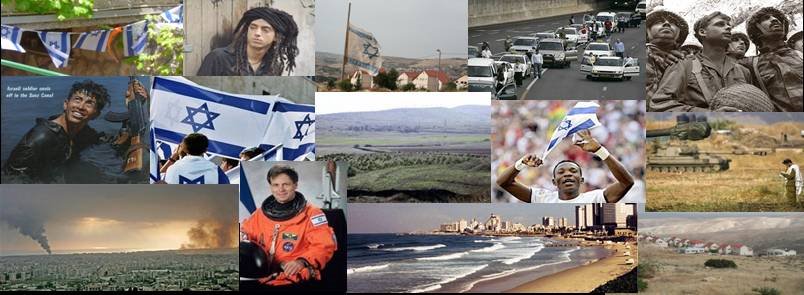
The first of February marks the Yahrzeit of an Israeli who encapsulated all the best this country has to offer. The child of Holocaust survivors, a scientist who excited and united the whole nation with his mission, a pilot who helped stop Iraq going nuclear, a secular Israeli who wanted to keep Kosher and Shabbat in space, Ilan Ramon’s shuttle burnt up on its re-entry into the Earth’s atmosphere four years ago this week. And as the President waits for an Emil Zola who probably won't arrive, normal patriotic Israelis who love this country are trying to follow in the footsteps of a real Israeli hero and ambassador, pledging their future here and demonstrating their belief in the idea that the Israel that currently is, isn’t necessarily the Israel that could be… and planning on being around long enough to try and facilitate that much needed change.