Rosh Hashana is a time to take stock, a time for self reflection. A time to think about whether we have become the type of people we wanted, whether we are achieving what we set out to achieve;
Rosh Hashana is for me more than just making a new year’s resolution of being less addicted to the internet and not picking my nose in public. It makes me think about what I have done this year, what have I achieved and what I have seen. The people I’ve met and those I’ve lost touch with; the people I’ve helped and those I’ve hurt. It brings me back to the time when I nearly had a panic attack on the other side of the world, being a witness at Adam’s wedding, making Shabbat with 13 Israelis in Chile, leaving England and arriving in Israel for the first time as an oleh, being published in the jpost, meeting Rachel, celebrating with Kadima on election night, interviewing for jobs in Hebrew…the weddings, births and funerals; the times when I felt free and liberated, and the times when my self esteem was low.
And its not just individuals who our tradition says are judged but countries. What does the new year bring for Israel? How many civilians and soldiers will not celebrate next Rosh Hashanah? Will there be more elections? Will the social gap decrease? Will our neighbours finally accept us in the region? Will there be another Disengagement and talk of civil strife?
In addition, it’s also a time of hopes for the coming year; And for me, there can be no greater hope than that of David Grossman who wrote the following in memory of his son Uri, a tank commander killed just before the cease fire in Lebanon came into effect;
I fervently hope that we will know how to be more tender toward one another. I fervently hope that we will succeed in extricating ourselves from the violence and hostility that have seeped so deeply into all aspects of our lives. I fervently hope that we will know how to straighten up and save ourselves now, at the very last minute, because very hard times still await us.
Uri was a very Israeli child; even his name is so Israeli and so Hebrew. He was the essence of Israeliness as I would want to see it. The Israeliness that has almost been forgotten. The Israeliness that is sometimes considered almost a curiosity. And he was a person with values. This word has been much eroded and has been ridiculed in recent years, because in our crazy, cruel and cynical world it is not "cool" to be a person of values, or to be a humanist, or be truly sensitive to the other's distress, even if the other is your enemy on the field of battle. But I learned from Uri that it is indeed both possible and necessary. That we indeed need to preserve our soul. To defend ourselves in both senses: both to protect our life and to preserve our soul. To insist on defending it from simplistic might and simplistic thinking, from the corruption that lies in cynicism, from the pollution of the heart and the scorn for human beings that truly represent the biggest curse for everyone who lives his whole life in a disaster zone like ours.
And whatever happens in the next year, atleast I feel that I am in the right place to appreciate it, inside the ring fighting rather than looking in from the outside.
Shana Tova Leculam
Friday, September 22, 2006

Wanna Live like Common People
I first met Ohad in the quaint and beautiful town of Pucon in Chile. Arriving at the travel agency to organize my climb up Mount Villarica, I had got chatting to two guys, one with dreads, one with long hair; both clearly Israeli. I later bumped into them again in a youth hostel in Southern Chile and continued with Ohad back into Argentina
Over cookies and coffee in my apartment in Jerusalem we discussed the war in the north; how motivation amongst soldiers was initially high, how almost everyone who was called up came. Ohad spoke of the disorganization – of being told to walk a distance of 15km to clear a road only to be overtaken half way through by soldiers on trucks; of getting ready for numerous missions only for them to be cancelled at the last minute. Of how, as time went on, soldiers began to lose faith in the system and to demand answers that no one could give them; Of how some units were even lacking water.
The balagan in the IDF didn’t end there. A recent report claimed a dangerous mission in Bal–Bek involving 200 elite soldiers as having been undertaken simply for morale. Ben Caspit in Maariv wrote of how an army general, Ron Tal, who had written a critical study of the IDF before the war, had been fired.
Rosh Hashana is about taking responsibility, both personal and national. But what does it say about our leaders when all plan to stay put? Or when previous Ministers are dishing out the blame like they are completely innocent of our complete logistical unpreparedness? What type of country is it when a population that overwhelmingly rejected Netanyahu 4 months ago would now want him back as prime minister or when Yom Hadin might actually literally be a day in court for some of our politicians?
Israel goes into 5767 with increasing social gaps, with an unstable government only 6 months after the elections; with a President facing impeachment and with the threat of a looming nuclear Iran.
Yet whilst the leaders may be refusing to take responsibility, normal people continue to do their bit and step up to the plate. And despite 60% of people saying this week that the country is not in a good state, 88% of Israelis say they are very happy here! Last week I went to the swearing in ceremony at the Western Wall of one of my tour chanichim, Barry. I am not sure whether my post modern sensibilities will ever feel comfortable hearing people swearing allegiance to their homeland. I doubt I will get used to 18 year olds waving their guns around, or the fact that young boys continue to lose their youth protecting our society. But what can one say when in a place that 40 years ago we didn’t have? And how can one argue with militarism in society when 60 years ago our people were marched to the gas chambers?
And all of these people, they aren’t fundamentalists; many aren’t even ideologues; they’re just normal people, students and professionals, fathers and husbands, who leave their normal life to defend our state. And many may have lost confidence in the political leadership, may feel that the army has let them down. But they will continue to come, will continue to answer their tzav shmone to serve and defend. They are people who continue to believe in the Jewish state as an idea, even at times when that concept is harder to justify.
The Haftara we read on second day Rosh Hashana talks about an Am Seridei Charev, a people who have survived the sword coming back to the land and describes the day when men and women, young and old will dance happily in the streets, a people whose mourning has been turned into joy. And in many ways I do wish that this country was more like Chile, with its 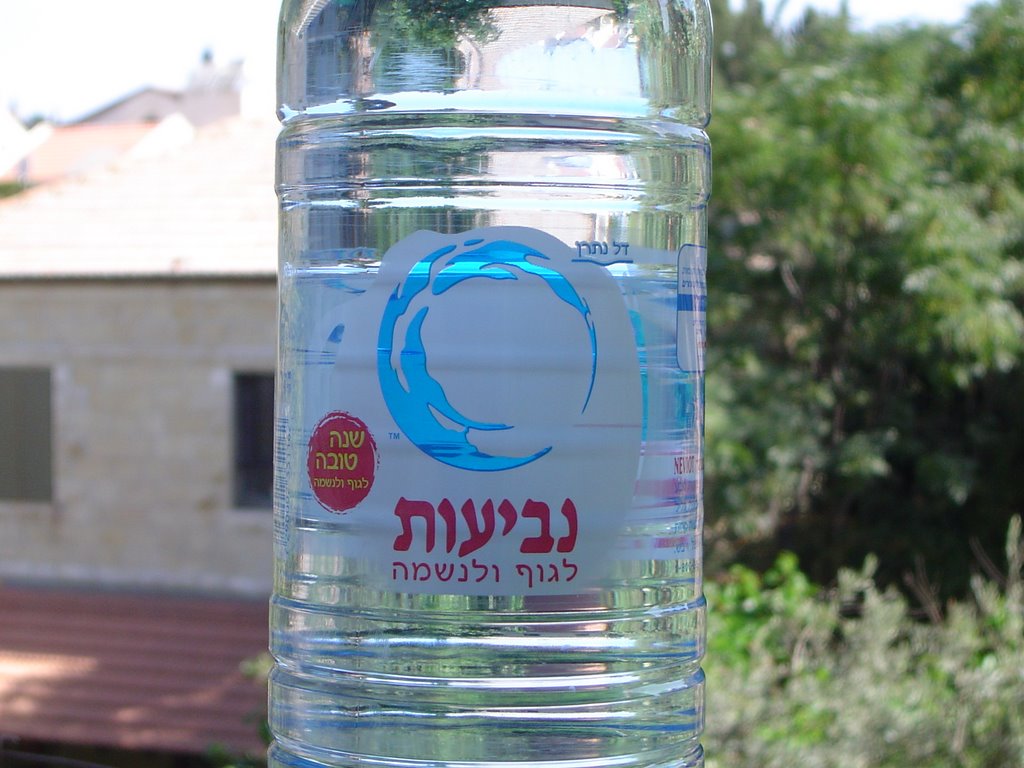 quietness and peacefulness, without the fear of war, or tragedy hovering over it. But if the question is whether our cup is half full or half empty there can only really be one answer.
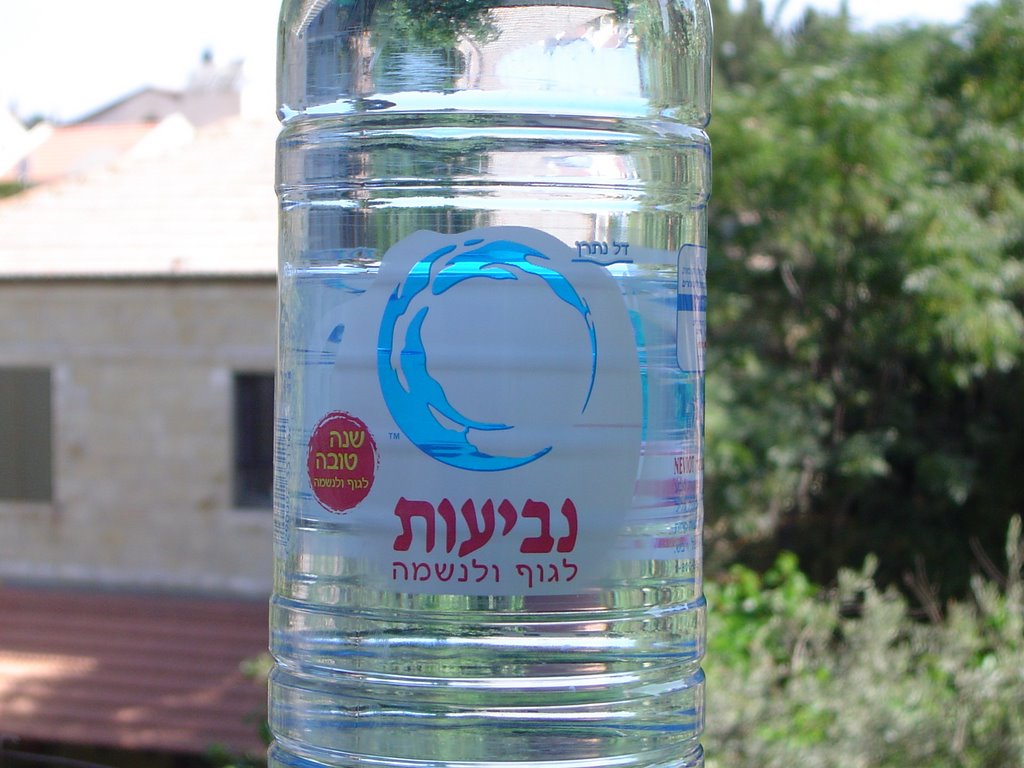
And where else in the world can you buy a bottle of water that will wish you a shana tova leguf uleneshama, a happy new year for body and soul?
Tuesday, August 29, 2006
The long goodbye...
I didn’t realize that the second time would be harder than the first. Yet I shouldn’t have been surprised; Right from the times I refused to come to the door to wave off close family friends when I was little, I have always had issues with saying goodbye.
That’s something that people don’t necessarily tell you about Aliya. That however exciting it is to start a new life, to go to a new place, to meet new people and to do new things, it also means you have to leave behind others.
So as I stood in the refurbished Bull and Bush for my second ‘leaving drinks,’ already feeling a bit like a visitor, the thought of when I’ll next see many of my friends again did flash through my mind.
And however much I like to pretend that Aliya is not a big step, not a million miles away from England, that I’ll stay the same and see people the whole time, the truth is that I made a decision to change the direction of my life; And I stand by that decision 1000%. Yet at some stage, hopefully a long time from now but at some stage nevertheless, those that didn’t make a similar choice will become a less central aspect in my life. And no matter how happy I am in my new life that fact is bittersweet - because you can’t replace someone you have known since nursery who remembers you in a red apron and curls, or someone you laughed with at camp as a 12 year old; or the people you celebrated GCSE results with in Netanya, the mischief in Physics lessons, the nights out in Leeds, the football matches on the Heath… You can’t necessarily recreate those one liners, the jokes, the memories, the places…
So I will be at their weddings, and I hope they’ll be at mine. But in some ways, I can’t help thinking that the trip to England was the beginning of the end of my connection there.
Because the beginning of a new life in some ways inevitably means the ending of an old one.
Monday, August 14, 2006
'Observing' the Conflict
On Friday, i took part in a conversation involving a Jewish girl and two Lebanese living in London about the current situation in the region for the Observer newspaper; Below is part of our dialogue that lasted 90 mins and left me exhausted and with a massive headache.
Calev Ben-Dor: What you seem to be suggesting that Israel should have done is nothing.
Karma El-Fadl: Not nothing - nothing violent. But not nothing. If land is no longer occupied, if they go back and enforce the 1949 peace agreement, and Israel leaves what is has taken, then Hizbollah's presence is no longer justified.
Francesca Segal: But if you can see it from Israel's perspective, that they feel behind Hizbollah the looming presence of Iran pointing potentially nuclear weapons at a state they intend to destroy.
Fayez Khouri: Why are you guys being so paranoid?
Calev Ben-Dor: If you had our history, you'd also be paranoid.
Karma El-Fadl: I think your history is part of our history.
Calev Ben-Dor: I just don't want a terrorist organisation on my doorstep pointing 10,000 rockets at me, that's all.
Fayez Khouri: We don't agree with Hizbollah, that's my point. But this is not the way to get rid of them...
………………………
Calev Ben-Dor: What you seem to be suggesting that Israel should have done is nothing.
Karma El-Fadl: Not nothing - nothing violent. But not nothing. If land is no longer occupied, if they go back and enforce the 1949 peace agreement, and Israel leaves what is has taken, then Hizbollah's presence is no longer justified.
Francesca Segal: But if you can see it from Israel's perspective, that they feel behind Hizbollah the looming presence of Iran pointing potentially nuclear weapons at a state they intend to destroy.
Fayez Khouri: Why are you guys being so paranoid?
Calev Ben-Dor: If you had our history, you'd also be paranoid.
Karma El-Fadl: I think your history is part of our history.
Calev Ben-Dor: I just don't want a terrorist organisation on my doorstep pointing 10,000 rockets at me, that's all.
Fayez Khouri: We don't agree with Hizbollah, that's my point. But this is not the way to get rid of them...
Thursday, August 03, 2006
War, Fasts and Proportionality
* The general consensus for the reason behind the destruction of the second temple was the sin of Sinat Chinam, baseless hatred. The Netziv adds a slightly different take on its meaning – that although everyone at the time was righteous and learned, they termed anyone who carried out commandments differently to them a heretic.
Someone who kept 6 hours after eating meat for example would think a mere 3 hourer was a disbeliever. Someone who held by the London Eruv wouldn’t get called up to read from the Torah.
In short, it was for the sin of only seeing black or white, an inability to appreciate difference and complexity, or to see other opinions as legitimate that caused fissures in our society and ultimately destroyed the temple.
* This week was the anniversary of the Disengagement, when 8,000 people were forcibly removed from their homes by the IDF with various films and demonstrations marking the event. One documentary ‘5 days’ followed the general responsible for the operation Dan Harel coming to evacuate Atzmona, a religious pre-military academy.
The soldiers came to find the 200 students in the Bet Midrash dancing and crying, led by their Rabbi, Rafi Peretz, himself a colonel in the reserves. Rav Rafi thinks Disengagement is a disaster yet when he sees Dan Harel he goes to hug him, sobbing ‘all this, its all so cynical.’ Members of the auditorium were shocked as to why anyone against Disengagement would even want to speak to Dan Harel.
* And in case anyone had forgotten, the war still continues...Friday’s Haaretz magazine ran a feature interviewing the founders of the 4 mothers movement, a group of women who were highly influential in creating public pressure for an IDF withdrawal from Lebanon 6 years ago.
And as Katuyshas continued to rain down on Israeli cities and our boys were once again losing their lives in South Lebanon, the big question was whether they had been mistaken and what their current views were on the conflict.
One of the women, Zohora Antebi, responded ambivalently; 'Like all wars' she said 'this war, too is accursed. But this is an existential war at levels we do not yet understand. I think that it is approaching the War of Independence in terms of importance. It will determine whether Iran will control the Arab world. It will determine whether we will be able to survive against extreme Islam. I have no doubt about the necessity for this state. I am in Israel, because only in Israel will my child not be turned into soap. I am in Israel because I remember our attempt to assimilate into others for 2,000 years. And it is totally clear to me that all the French and German and Dutch bleeding hearts will not want us in their countries. This is the only place. And this place has to be fought for. We have to understand the complexity…'
Understanding complexity seems to be in short supply here…from those who a year on still view Disengagement as akin to what the Nazis did to Norwegian newspapers who compare Olmert to Amon Goeth. From those who see Sharon’s illness as a punishment for ethnic cleansing to those who decide moral accountability by tallying up body counts.
Of course it’s far simpler to accuse Israel of war crimes without struggling with issues of what the Geneva Convention says about states fighting non states who hide amongst civilians.
It’s far easier to talk about proportionality without discussing what kind of response against a fundamentalist terror organization with 13,000 rockets endangering a third of your country would be proportionate, or to immediately blame Israel even when its attacked on its own soil by organizations who aim at its destruction.
It’s harder to be like Rafi Peretz, or Zohora Antebi; harder to appreciate that a war can be justified but still accursed, harder to embrace a general carrying out an evil order, harder to see an opinion other than our own as legitimate.
So on Tisha Be’av, a day when we mark the destruction of our temple, the end of our sovereignty that was only recently regained and which we are currently fighting to protect, perhaps all of us, Israelis and Europeans, right and left wing, should attempt to embrace the complexity that wracks all our lives, try and be that extra bit proportionate in our opinions.
Because we didn’t regain this country to lose it making the same mistakes as in the past…
Someone who kept 6 hours after eating meat for example would think a mere 3 hourer was a disbeliever. Someone who held by the London Eruv wouldn’t get called up to read from the Torah.
In short, it was for the sin of only seeing black or white, an inability to appreciate difference and complexity, or to see other opinions as legitimate that caused fissures in our society and ultimately destroyed the temple.
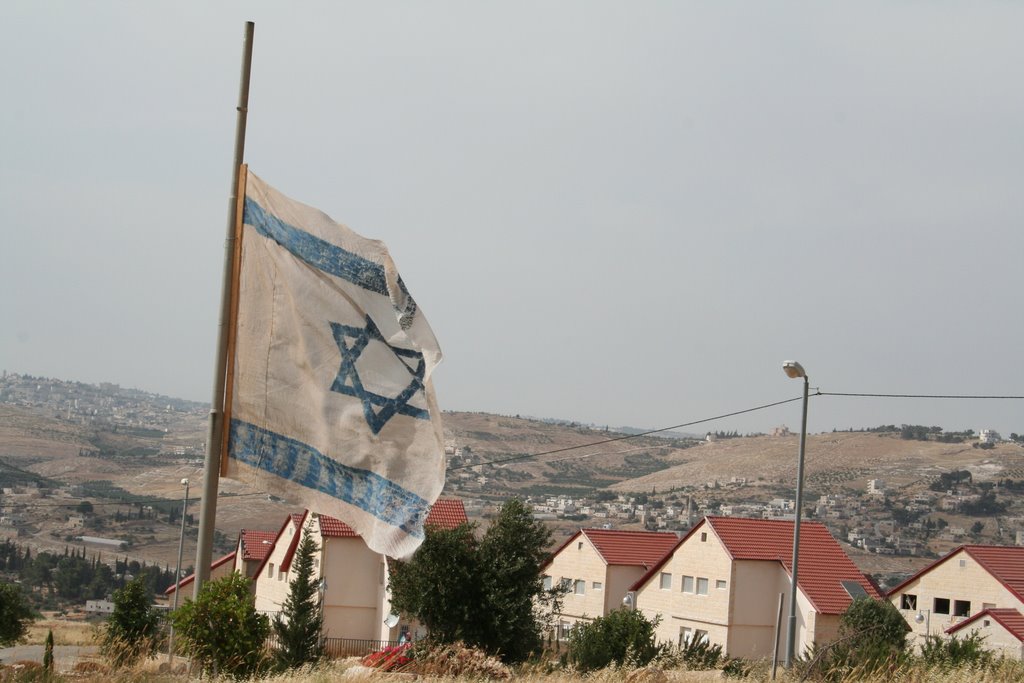
* This week was the anniversary of the Disengagement, when 8,000 people were forcibly removed from their homes by the IDF with various films and demonstrations marking the event. One documentary ‘5 days’ followed the general responsible for the operation Dan Harel coming to evacuate Atzmona, a religious pre-military academy.
The soldiers came to find the 200 students in the Bet Midrash dancing and crying, led by their Rabbi, Rafi Peretz, himself a colonel in the reserves. Rav Rafi thinks Disengagement is a disaster yet when he sees Dan Harel he goes to hug him, sobbing ‘all this, its all so cynical.’ Members of the auditorium were shocked as to why anyone against Disengagement would even want to speak to Dan Harel.
* And in case anyone had forgotten, the war still continues...Friday’s Haaretz magazine ran a feature interviewing the founders of the 4 mothers movement, a group of women who were highly influential in creating public pressure for an IDF withdrawal from Lebanon 6 years ago.
And as Katuyshas continued to rain down on Israeli cities and our boys were once again losing their lives in South Lebanon, the big question was whether they had been mistaken and what their current views were on the conflict.
One of the women, Zohora Antebi, responded ambivalently; 'Like all wars' she said 'this war, too is accursed. But this is an existential war at levels we do not yet understand. I think that it is approaching the War of Independence in terms of importance. It will determine whether Iran will control the Arab world. It will determine whether we will be able to survive against extreme Islam. I have no doubt about the necessity for this state. I am in Israel, because only in Israel will my child not be turned into soap. I am in Israel because I remember our attempt to assimilate into others for 2,000 years. And it is totally clear to me that all the French and German and Dutch bleeding hearts will not want us in their countries. This is the only place. And this place has to be fought for. We have to understand the complexity…'
Understanding complexity seems to be in short supply here…from those who a year on still view Disengagement as akin to what the Nazis did to Norwegian newspapers who compare Olmert to Amon Goeth. From those who see Sharon’s illness as a punishment for ethnic cleansing to those who decide moral accountability by tallying up body counts.
Of course it’s far simpler to accuse Israel of war crimes without struggling with issues of what the Geneva Convention says about states fighting non states who hide amongst civilians.
It’s far easier to talk about proportionality without discussing what kind of response against a fundamentalist terror organization with 13,000 rockets endangering a third of your country would be proportionate, or to immediately blame Israel even when its attacked on its own soil by organizations who aim at its destruction.
It’s harder to be like Rafi Peretz, or Zohora Antebi; harder to appreciate that a war can be justified but still accursed, harder to embrace a general carrying out an evil order, harder to see an opinion other than our own as legitimate.
So on Tisha Be’av, a day when we mark the destruction of our temple, the end of our sovereignty that was only recently regained and which we are currently fighting to protect, perhaps all of us, Israelis and Europeans, right and left wing, should attempt to embrace the complexity that wracks all our lives, try and be that extra bit proportionate in our opinions.
Because we didn’t regain this country to lose it making the same mistakes as in the past…
Friday, July 21, 2006
Letter to a Soldier
Dear B
After speaking to you over lunch on Shabbat I thought of things I wanted to add (isn’t that always the way.) I am not sure when you will have time to read this, but I hope that basic training goes o.k. and is not too depressing – knowing you, you’ll probably love it! And above all else, I really hope your army experience is everything you want it to be.
On Friday I saw a film called Ulpan life, describing the experiences of 5 different olim chadashim in Israel. One, a Chinese girl called Dong Dong met her Israeli husband on a tiyul and returned with him to set up life in Israel. Dong Dong dreams about making a documentary about Chinese workers in Israel ‘but not about their hardships, something that Israelis always discuss…about their love for this country.’
Yet as she meets the workers and hears their stories she realizes that the awful conditions they experience demand something else – that she films their lives and creates visual testimony to their hardships. And in a passage I found particularly moving she says, ‘Maybe after being here (in Israel) for a few years here I will become numb to all of this; but I don’t want to become numb, I want to do something about it…’
Last week we read about Pinchas who is given a ‘Brit Shalom’ by God after zealously slaying two people engaged in a forbidden act. The Torah’s view on zealotry is ambivalent at best – the line between killing to protect God’s honour and murdering to protect our own is thin according to the commentaries. And why is this man who kills given a Brit Shalom? Because, according to the Netziv, after what Pinchas did, he needed it - the inherent nature of killing people, even if divinely sanctioned, could have left him with feelings of hate.
And I think is being suggested is that killing may sometimes be acceptable, but it leaves its mark on the killer. Because there are things that even if they are right and need to be done, they still have negative consequences.
And the line between killing to defend values we cherish and murder is sometimes blurry at best.
Whilst on a personal political level, I look forward to the day when Israel will be able to leave most of the ‘territories’ I also believe that the army is doing an important, even crucial job. And Kol HaKavod to Tzahal! The job your unit does is essential to us mere civilians being able to sleep safe at night or get on a bus to work safely.
Yet the work they do is also sometimes ugly, sensitive; and over time can take its emotional toll.
It may be necessary to do. But, long bouts of military activity in civilian population centres effects people, wears them down, makes them indifferent to suffering. It can make us numb.
So above all, stay safe, and look after yourself (and don’t listen to those Israelis that will tell you you’re crazy.) And in addition, try and battle the feelings of hatred or indifference that the work you do may naturally lead to. And do your best not to be numb to other people’s suffering (even if they are on the other side to us.)
Because our emotions and ability for compassion make us who we are. And none of us made Aliya to ultimately become indifferent to what happens here.
May God give you a Brit Shalom.
After speaking to you over lunch on Shabbat I thought of things I wanted to add (isn’t that always the way.) I am not sure when you will have time to read this, but I hope that basic training goes o.k. and is not too depressing – knowing you, you’ll probably love it! And above all else, I really hope your army experience is everything you want it to be.
On Friday I saw a film called Ulpan life, describing the experiences of 5 different olim chadashim in Israel. One, a Chinese girl called Dong Dong met her Israeli husband on a tiyul and returned with him to set up life in Israel. Dong Dong dreams about making a documentary about Chinese workers in Israel ‘but not about their hardships, something that Israelis always discuss…about their love for this country.’
Yet as she meets the workers and hears their stories she realizes that the awful conditions they experience demand something else – that she films their lives and creates visual testimony to their hardships. And in a passage I found particularly moving she says, ‘Maybe after being here (in Israel) for a few years here I will become numb to all of this; but I don’t want to become numb, I want to do something about it…’
Last week we read about Pinchas who is given a ‘Brit Shalom’ by God after zealously slaying two people engaged in a forbidden act. The Torah’s view on zealotry is ambivalent at best – the line between killing to protect God’s honour and murdering to protect our own is thin according to the commentaries. And why is this man who kills given a Brit Shalom? Because, according to the Netziv, after what Pinchas did, he needed it - the inherent nature of killing people, even if divinely sanctioned, could have left him with feelings of hate.
And I think is being suggested is that killing may sometimes be acceptable, but it leaves its mark on the killer. Because there are things that even if they are right and need to be done, they still have negative consequences.
And the line between killing to defend values we cherish and murder is sometimes blurry at best.
Whilst on a personal political level, I look forward to the day when Israel will be able to leave most of the ‘territories’ I also believe that the army is doing an important, even crucial job. And Kol HaKavod to Tzahal! The job your unit does is essential to us mere civilians being able to sleep safe at night or get on a bus to work safely.
Yet the work they do is also sometimes ugly, sensitive; and over time can take its emotional toll.
It may be necessary to do. But, long bouts of military activity in civilian population centres effects people, wears them down, makes them indifferent to suffering. It can make us numb.
So above all, stay safe, and look after yourself (and don’t listen to those Israelis that will tell you
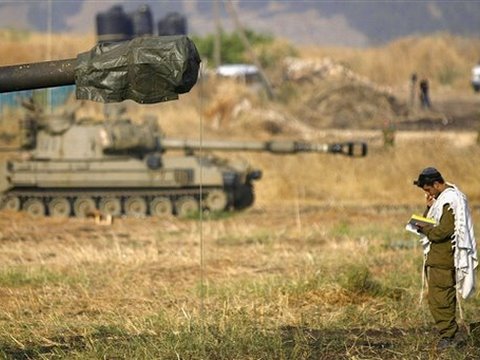 you’re crazy.) And in addition, try and battle the feelings of hatred or indifference that the work you do may naturally lead to. And do your best not to be numb to other people’s suffering (even if they are on the other side to us.)
Because our emotions and ability for compassion make us who we are. And none of us made Aliya to ultimately become indifferent to what happens here.
May God give you a Brit Shalom.
Wednesday, July 19, 2006
Nasrallah and the Spider's Web
You know you’ve been watching too much TV when the ‘breaking news’ is neither just breaking nor news. And you know black humour is taking over when you start making a list of ‘top 3 things to take into a bomb shelter’ (do bomb shelters have wireless?)
I spent the last two days in Tel Aviv wondering what I would do if I heard a siren heralding the arrival of a Katuysha. Sitting outside a café on Diezengoff, walking in the Azrieli centre, relaxing by the beach…how far can I run in a minute? Where is the nearest bomb shelter or stairwell? Is that a siren, or only cars hooting? Whilst for people in Tel Aviv these questions remain hypothetical, citizens further north, Israeli Jews and Arabs have been spending much of the past week in their Miklat. This war may not yet have a name, but it is actively affecting people’s lives. Sometimes, tragically, it is taking them.

Head of Hizbullah Hassan Nasrallah looked at Israeli society and saw weakness, a spider’s web that seemed strong but could be easily broken, a materialistic culture drunk on its economic success and bending over backwards to appease an unstoppable wave of Islamic nationalism. He saw the unequal prisoner exchanges, the withdrawals to the international border in Lebanon and Gaza, the inexperienced triumvirate of Olmert, Peretz and Chief of Staff Dan Halutz and wanted to test us. And he thought, as spiders webs do, that we would break.
He was wrong.
Because just as the theory goes that only the right wing can make peace, similarly only the left wing can make war. And it tells you something that in a country with no word for consensus, everyone from Lieberman to Livni, from Bibi to Beilin agree that military action against Hizbullah is justified and legitimate. And it’s amazing that in a week in which a million people remain under the threat of rocket fire, there have been no mass demonstrations against the war or no-confidence votes against the government.
Because whilst we wish our relationship with our neighbours was similar to that of France and Belgium, or Finland and Sweden, a post modern borderless world where trade trumps all, we also know that this is the Mid East, not the Mid West, and Switzerlands don’t survive for very long here. Sometimes, we need to fight. And strangely enough, and for the first time in recent memory, I think most countries in Europe (apart from Finland, France, and maybe Switzerland, understand that.)

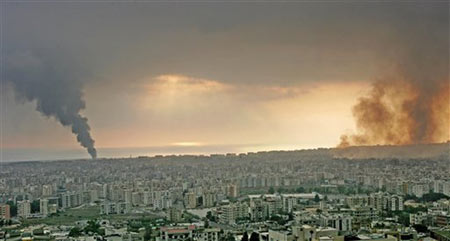
view from Beirut
We may be more individualistic than in the past. We may have given up on the dream of the greater land of Israel, may have decided that being in historical places such as Bet El and Shilo is no longer in the Zionist interest. There may be fewer people going into combat units, and less soldiers turning up for miluim. The dream of many Israelis may be to go to America and make money…but we’re no spider’s web.
We’re a state based on an unspeakable bond. A people drawn together by a shared past and a unified future. A society that may seem weak and unable to decide on national priorities, but in reality one that has red lines that no one is willing to compromise on. And what Nasrallah (and Arafat and Saddam Hussein before him) failed to realise is that you don’t need to be a fundamentalist to have a way of life worth fighting for, don’t need to be an extremist to be willing to make sacrifices for the greater good.
You just need to know that, as the famous Israeli song goes, we have no other land, even if it’s burning.
Subscribe to:
Comments (Atom)