Tuesday, August 29, 2006
The long goodbye...
I didn’t realize that the second time would be harder than the first. Yet I shouldn’t have been surprised; Right from the times I refused to come to the door to wave off close family friends when I was little, I have always had issues with saying goodbye.
That’s something that people don’t necessarily tell you about Aliya. That however exciting it is to start a new life, to go to a new place, to meet new people and to do new things, it also means you have to leave behind others.
So as I stood in the refurbished Bull and Bush for my second ‘leaving drinks,’ already feeling a bit like a visitor, the thought of when I’ll next see many of my friends again did flash through my mind.
And however much I like to pretend that Aliya is not a big step, not a million miles away from England, that I’ll stay the same and see people the whole time, the truth is that I made a decision to change the direction of my life; And I stand by that decision 1000%. Yet at some stage, hopefully a long time from now but at some stage nevertheless, those that didn’t make a similar choice will become a less central aspect in my life. And no matter how happy I am in my new life that fact is bittersweet - because you can’t replace someone you have known since nursery who remembers you in a red apron and curls, or someone you laughed with at camp as a 12 year old; or the people you celebrated GCSE results with in Netanya, the mischief in Physics lessons, the nights out in Leeds, the football matches on the Heath… You can’t necessarily recreate those one liners, the jokes, the memories, the places…
So I will be at their weddings, and I hope they’ll be at mine. But in some ways, I can’t help thinking that the trip to England was the beginning of the end of my connection there.
Because the beginning of a new life in some ways inevitably means the ending of an old one.

Monday, August 14, 2006
'Observing' the Conflict
On Friday, i took part in a conversation involving a Jewish girl and two Lebanese living in London about the current situation in the region for the Observer newspaper; Below is part of our dialogue that lasted 90 mins and left me exhausted and with a massive headache.
Calev Ben-Dor: What you seem to be suggesting that Israel should have done is nothing.
Karma El-Fadl: Not nothing - nothing violent. But not nothing. If land is no longer occupied, if they go back and enforce the 1949 peace agreement, and Israel leaves what is has taken, then Hizbollah's presence is no longer justified.
Francesca Segal: But if you can see it from Israel's perspective, that they feel behind Hizbollah the looming presence of Iran pointing potentially nuclear weapons at a state they intend to destroy.
Fayez Khouri: Why are you guys being so paranoid?
Calev Ben-Dor: If you had our history, you'd also be paranoid.
Karma El-Fadl: I think your history is part of our history.
Calev Ben-Dor: I just don't want a terrorist organisation on my doorstep pointing 10,000 rockets at me, that's all.
Fayez Khouri: We don't agree with Hizbollah, that's my point. But this is not the way to get rid of them...
………………………
Calev Ben-Dor: What you seem to be suggesting that Israel should have done is nothing.
Karma El-Fadl: Not nothing - nothing violent. But not nothing. If land is no longer occupied, if they go back and enforce the 1949 peace agreement, and Israel leaves what is has taken, then Hizbollah's presence is no longer justified.
Francesca Segal: But if you can see it from Israel's perspective, that they feel behind Hizbollah the looming presence of Iran pointing potentially nuclear weapons at a state they intend to destroy.
Fayez Khouri: Why are you guys being so paranoid?
Calev Ben-Dor: If you had our history, you'd also be paranoid.
Karma El-Fadl: I think your history is part of our history.
Calev Ben-Dor: I just don't want a terrorist organisation on my doorstep pointing 10,000 rockets at me, that's all.
Fayez Khouri: We don't agree with Hizbollah, that's my point. But this is not the way to get rid of them...
Thursday, August 03, 2006
War, Fasts and Proportionality
* The general consensus for the reason behind the destruction of the second temple was the sin of Sinat Chinam, baseless hatred. The Netziv adds a slightly different take on its meaning – that although everyone at the time was righteous and learned, they termed anyone who carried out commandments differently to them a heretic.
Someone who kept 6 hours after eating meat for example would think a mere 3 hourer was a disbeliever. Someone who held by the London Eruv wouldn’t get called up to read from the Torah.
In short, it was for the sin of only seeing black or white, an inability to appreciate difference and complexity, or to see other opinions as legitimate that caused fissures in our society and ultimately destroyed the temple.
* This week was the anniversary of the Disengagement, when 8,000 people were forcibly removed from their homes by the IDF with various films and demonstrations marking the event. One documentary ‘5 days’ followed the general responsible for the operation Dan Harel coming to evacuate Atzmona, a religious pre-military academy.
The soldiers came to find the 200 students in the Bet Midrash dancing and crying, led by their Rabbi, Rafi Peretz, himself a colonel in the reserves. Rav Rafi thinks Disengagement is a disaster yet when he sees Dan Harel he goes to hug him, sobbing ‘all this, its all so cynical.’ Members of the auditorium were shocked as to why anyone against Disengagement would even want to speak to Dan Harel.
* And in case anyone had forgotten, the war still continues...Friday’s Haaretz magazine ran a feature interviewing the founders of the 4 mothers movement, a group of women who were highly influential in creating public pressure for an IDF withdrawal from Lebanon 6 years ago.
And as Katuyshas continued to rain down on Israeli cities and our boys were once again losing their lives in South Lebanon, the big question was whether they had been mistaken and what their current views were on the conflict.
One of the women, Zohora Antebi, responded ambivalently; 'Like all wars' she said 'this war, too is accursed. But this is an existential war at levels we do not yet understand. I think that it is approaching the War of Independence in terms of importance. It will determine whether Iran will control the Arab world. It will determine whether we will be able to survive against extreme Islam. I have no doubt about the necessity for this state. I am in Israel, because only in Israel will my child not be turned into soap. I am in Israel because I remember our attempt to assimilate into others for 2,000 years. And it is totally clear to me that all the French and German and Dutch bleeding hearts will not want us in their countries. This is the only place. And this place has to be fought for. We have to understand the complexity…'
Understanding complexity seems to be in short supply here…from those who a year on still view Disengagement as akin to what the Nazis did to Norwegian newspapers who compare Olmert to Amon Goeth. From those who see Sharon’s illness as a punishment for ethnic cleansing to those who decide moral accountability by tallying up body counts.
Of course it’s far simpler to accuse Israel of war crimes without struggling with issues of what the Geneva Convention says about states fighting non states who hide amongst civilians.
It’s far easier to talk about proportionality without discussing what kind of response against a fundamentalist terror organization with 13,000 rockets endangering a third of your country would be proportionate, or to immediately blame Israel even when its attacked on its own soil by organizations who aim at its destruction.
It’s harder to be like Rafi Peretz, or Zohora Antebi; harder to appreciate that a war can be justified but still accursed, harder to embrace a general carrying out an evil order, harder to see an opinion other than our own as legitimate.
So on Tisha Be’av, a day when we mark the destruction of our temple, the end of our sovereignty that was only recently regained and which we are currently fighting to protect, perhaps all of us, Israelis and Europeans, right and left wing, should attempt to embrace the complexity that wracks all our lives, try and be that extra bit proportionate in our opinions.
Because we didn’t regain this country to lose it making the same mistakes as in the past…
Someone who kept 6 hours after eating meat for example would think a mere 3 hourer was a disbeliever. Someone who held by the London Eruv wouldn’t get called up to read from the Torah.
In short, it was for the sin of only seeing black or white, an inability to appreciate difference and complexity, or to see other opinions as legitimate that caused fissures in our society and ultimately destroyed the temple.
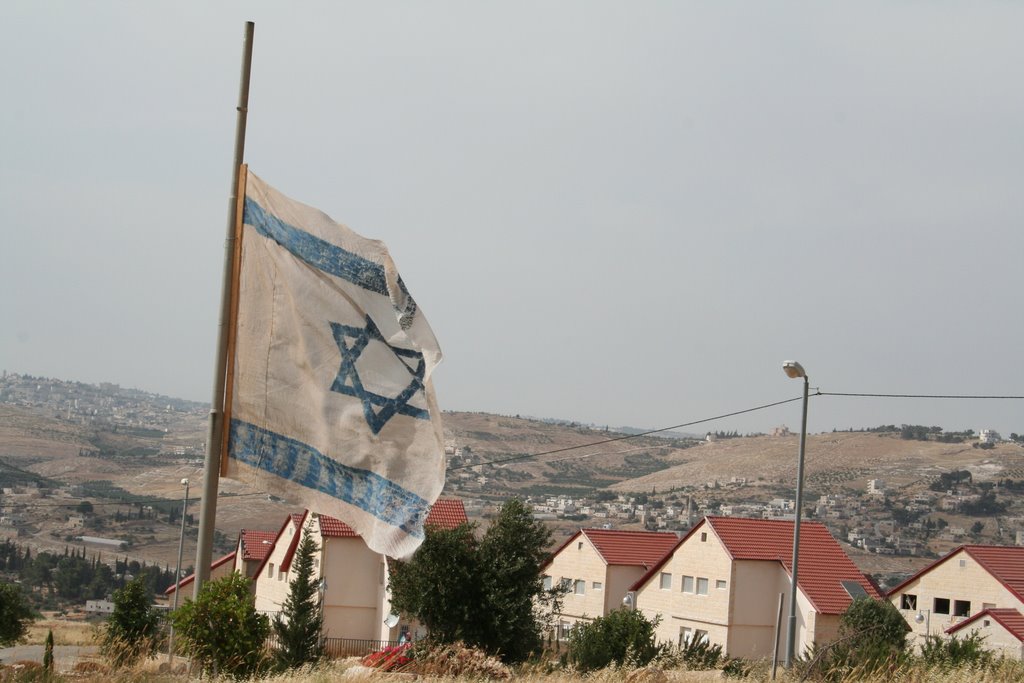
* This week was the anniversary of the Disengagement, when 8,000 people were forcibly removed from their homes by the IDF with various films and demonstrations marking the event. One documentary ‘5 days’ followed the general responsible for the operation Dan Harel coming to evacuate Atzmona, a religious pre-military academy.
The soldiers came to find the 200 students in the Bet Midrash dancing and crying, led by their Rabbi, Rafi Peretz, himself a colonel in the reserves. Rav Rafi thinks Disengagement is a disaster yet when he sees Dan Harel he goes to hug him, sobbing ‘all this, its all so cynical.’ Members of the auditorium were shocked as to why anyone against Disengagement would even want to speak to Dan Harel.
* And in case anyone had forgotten, the war still continues...Friday’s Haaretz magazine ran a feature interviewing the founders of the 4 mothers movement, a group of women who were highly influential in creating public pressure for an IDF withdrawal from Lebanon 6 years ago.
And as Katuyshas continued to rain down on Israeli cities and our boys were once again losing their lives in South Lebanon, the big question was whether they had been mistaken and what their current views were on the conflict.
One of the women, Zohora Antebi, responded ambivalently; 'Like all wars' she said 'this war, too is accursed. But this is an existential war at levels we do not yet understand. I think that it is approaching the War of Independence in terms of importance. It will determine whether Iran will control the Arab world. It will determine whether we will be able to survive against extreme Islam. I have no doubt about the necessity for this state. I am in Israel, because only in Israel will my child not be turned into soap. I am in Israel because I remember our attempt to assimilate into others for 2,000 years. And it is totally clear to me that all the French and German and Dutch bleeding hearts will not want us in their countries. This is the only place. And this place has to be fought for. We have to understand the complexity…'
Understanding complexity seems to be in short supply here…from those who a year on still view Disengagement as akin to what the Nazis did to Norwegian newspapers who compare Olmert to Amon Goeth. From those who see Sharon’s illness as a punishment for ethnic cleansing to those who decide moral accountability by tallying up body counts.
Of course it’s far simpler to accuse Israel of war crimes without struggling with issues of what the Geneva Convention says about states fighting non states who hide amongst civilians.
It’s far easier to talk about proportionality without discussing what kind of response against a fundamentalist terror organization with 13,000 rockets endangering a third of your country would be proportionate, or to immediately blame Israel even when its attacked on its own soil by organizations who aim at its destruction.
It’s harder to be like Rafi Peretz, or Zohora Antebi; harder to appreciate that a war can be justified but still accursed, harder to embrace a general carrying out an evil order, harder to see an opinion other than our own as legitimate.
So on Tisha Be’av, a day when we mark the destruction of our temple, the end of our sovereignty that was only recently regained and which we are currently fighting to protect, perhaps all of us, Israelis and Europeans, right and left wing, should attempt to embrace the complexity that wracks all our lives, try and be that extra bit proportionate in our opinions.
Because we didn’t regain this country to lose it making the same mistakes as in the past…
Friday, July 21, 2006
Letter to a Soldier
Dear B
After speaking to you over lunch on Shabbat I thought of things I wanted to add (isn’t that always the way.) I am not sure when you will have time to read this, but I hope that basic training goes o.k. and is not too depressing – knowing you, you’ll probably love it! And above all else, I really hope your army experience is everything you want it to be.
On Friday I saw a film called Ulpan life, describing the experiences of 5 different olim chadashim in Israel. One, a Chinese girl called Dong Dong met her Israeli husband on a tiyul and returned with him to set up life in Israel. Dong Dong dreams about making a documentary about Chinese workers in Israel ‘but not about their hardships, something that Israelis always discuss…about their love for this country.’
Yet as she meets the workers and hears their stories she realizes that the awful conditions they experience demand something else – that she films their lives and creates visual testimony to their hardships. And in a passage I found particularly moving she says, ‘Maybe after being here (in Israel) for a few years here I will become numb to all of this; but I don’t want to become numb, I want to do something about it…’
Last week we read about Pinchas who is given a ‘Brit Shalom’ by God after zealously slaying two people engaged in a forbidden act. The Torah’s view on zealotry is ambivalent at best – the line between killing to protect God’s honour and murdering to protect our own is thin according to the commentaries. And why is this man who kills given a Brit Shalom? Because, according to the Netziv, after what Pinchas did, he needed it - the inherent nature of killing people, even if divinely sanctioned, could have left him with feelings of hate.
And I think is being suggested is that killing may sometimes be acceptable, but it leaves its mark on the killer. Because there are things that even if they are right and need to be done, they still have negative consequences.
And the line between killing to defend values we cherish and murder is sometimes blurry at best.
Whilst on a personal political level, I look forward to the day when Israel will be able to leave most of the ‘territories’ I also believe that the army is doing an important, even crucial job. And Kol HaKavod to Tzahal! The job your unit does is essential to us mere civilians being able to sleep safe at night or get on a bus to work safely.
Yet the work they do is also sometimes ugly, sensitive; and over time can take its emotional toll.
It may be necessary to do. But, long bouts of military activity in civilian population centres effects people, wears them down, makes them indifferent to suffering. It can make us numb.
So above all, stay safe, and look after yourself (and don’t listen to those Israelis that will tell you you’re crazy.) And in addition, try and battle the feelings of hatred or indifference that the work you do may naturally lead to. And do your best not to be numb to other people’s suffering (even if they are on the other side to us.)
Because our emotions and ability for compassion make us who we are. And none of us made Aliya to ultimately become indifferent to what happens here.
May God give you a Brit Shalom.
After speaking to you over lunch on Shabbat I thought of things I wanted to add (isn’t that always the way.) I am not sure when you will have time to read this, but I hope that basic training goes o.k. and is not too depressing – knowing you, you’ll probably love it! And above all else, I really hope your army experience is everything you want it to be.
On Friday I saw a film called Ulpan life, describing the experiences of 5 different olim chadashim in Israel. One, a Chinese girl called Dong Dong met her Israeli husband on a tiyul and returned with him to set up life in Israel. Dong Dong dreams about making a documentary about Chinese workers in Israel ‘but not about their hardships, something that Israelis always discuss…about their love for this country.’
Yet as she meets the workers and hears their stories she realizes that the awful conditions they experience demand something else – that she films their lives and creates visual testimony to their hardships. And in a passage I found particularly moving she says, ‘Maybe after being here (in Israel) for a few years here I will become numb to all of this; but I don’t want to become numb, I want to do something about it…’
Last week we read about Pinchas who is given a ‘Brit Shalom’ by God after zealously slaying two people engaged in a forbidden act. The Torah’s view on zealotry is ambivalent at best – the line between killing to protect God’s honour and murdering to protect our own is thin according to the commentaries. And why is this man who kills given a Brit Shalom? Because, according to the Netziv, after what Pinchas did, he needed it - the inherent nature of killing people, even if divinely sanctioned, could have left him with feelings of hate.
And I think is being suggested is that killing may sometimes be acceptable, but it leaves its mark on the killer. Because there are things that even if they are right and need to be done, they still have negative consequences.
And the line between killing to defend values we cherish and murder is sometimes blurry at best.
Whilst on a personal political level, I look forward to the day when Israel will be able to leave most of the ‘territories’ I also believe that the army is doing an important, even crucial job. And Kol HaKavod to Tzahal! The job your unit does is essential to us mere civilians being able to sleep safe at night or get on a bus to work safely.
Yet the work they do is also sometimes ugly, sensitive; and over time can take its emotional toll.
It may be necessary to do. But, long bouts of military activity in civilian population centres effects people, wears them down, makes them indifferent to suffering. It can make us numb.
So above all, stay safe, and look after yourself (and don’t listen to those Israelis that will tell you
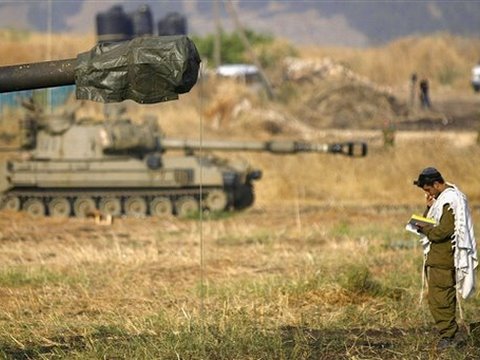 you’re crazy.) And in addition, try and battle the feelings of hatred or indifference that the work you do may naturally lead to. And do your best not to be numb to other people’s suffering (even if they are on the other side to us.)
Because our emotions and ability for compassion make us who we are. And none of us made Aliya to ultimately become indifferent to what happens here.
May God give you a Brit Shalom.
Wednesday, July 19, 2006
Nasrallah and the Spider's Web
You know you’ve been watching too much TV when the ‘breaking news’ is neither just breaking nor news. And you know black humour is taking over when you start making a list of ‘top 3 things to take into a bomb shelter’ (do bomb shelters have wireless?)
I spent the last two days in Tel Aviv wondering what I would do if I heard a siren heralding the arrival of a Katuysha. Sitting outside a café on Diezengoff, walking in the Azrieli centre, relaxing by the beach…how far can I run in a minute? Where is the nearest bomb shelter or stairwell? Is that a siren, or only cars hooting? Whilst for people in Tel Aviv these questions remain hypothetical, citizens further north, Israeli Jews and Arabs have been spending much of the past week in their Miklat. This war may not yet have a name, but it is actively affecting people’s lives. Sometimes, tragically, it is taking them.

Head of Hizbullah Hassan Nasrallah looked at Israeli society and saw weakness, a spider’s web that seemed strong but could be easily broken, a materialistic culture drunk on its economic success and bending over backwards to appease an unstoppable wave of Islamic nationalism. He saw the unequal prisoner exchanges, the withdrawals to the international border in Lebanon and Gaza, the inexperienced triumvirate of Olmert, Peretz and Chief of Staff Dan Halutz and wanted to test us. And he thought, as spiders webs do, that we would break.
He was wrong.
Because just as the theory goes that only the right wing can make peace, similarly only the left wing can make war. And it tells you something that in a country with no word for consensus, everyone from Lieberman to Livni, from Bibi to Beilin agree that military action against Hizbullah is justified and legitimate. And it’s amazing that in a week in which a million people remain under the threat of rocket fire, there have been no mass demonstrations against the war or no-confidence votes against the government.
Because whilst we wish our relationship with our neighbours was similar to that of France and Belgium, or Finland and Sweden, a post modern borderless world where trade trumps all, we also know that this is the Mid East, not the Mid West, and Switzerlands don’t survive for very long here. Sometimes, we need to fight. And strangely enough, and for the first time in recent memory, I think most countries in Europe (apart from Finland, France, and maybe Switzerland, understand that.)

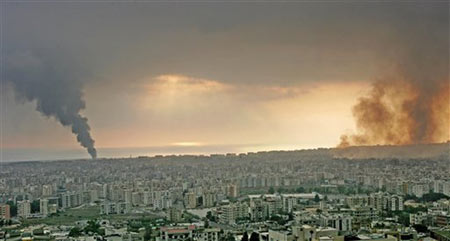
view from Beirut
We may be more individualistic than in the past. We may have given up on the dream of the greater land of Israel, may have decided that being in historical places such as Bet El and Shilo is no longer in the Zionist interest. There may be fewer people going into combat units, and less soldiers turning up for miluim. The dream of many Israelis may be to go to America and make money…but we’re no spider’s web.
We’re a state based on an unspeakable bond. A people drawn together by a shared past and a unified future. A society that may seem weak and unable to decide on national priorities, but in reality one that has red lines that no one is willing to compromise on. And what Nasrallah (and Arafat and Saddam Hussein before him) failed to realise is that you don’t need to be a fundamentalist to have a way of life worth fighting for, don’t need to be an extremist to be willing to make sacrifices for the greater good.
You just need to know that, as the famous Israeli song goes, we have no other land, even if it’s burning.
Wednesday, July 12, 2006
I'm not an academic failure...promise!
The following conversation took place this morning between me and someone who works for a strategic consultancy firm in Tel Aviv. I hope its 'success' will not be reflective of my general search for jobs.
Hi Calev?
Yes
Hi this is Shelly from ****. You spoke to Sharon before; I have your CV in front of me, I just wanted to ask you a few things
Sure
I wanted to ask you what mark you got in your psychometric?
Well actually I didn’t do a psychometric – I am an oleh from England but I do have a Masters degree.
o.k – well what did you get in your SATs ?
well we don’t do SATs either; what we have in England is GCSE’s which you take in 10 subjects when you are 16, and also A levels which you take in 3 subjects when you are 18. According to those marks you are accepted into university.
o.k – well what was your average mark
Well, GCSEs and A levels don’t actually have marks, they are A, B, C etc. I got good GCSEs and A Levels and what is called a Merit from LSE, the London School of Economics
Oh, I haven’t heard of that
Sorry?
Just personally, I haven’t heard of that
Oh, because a lot of Israelis go there, and its considered to be a pretty good place
Oh, well anyway, what was your average mark?
So in Leeds, where i got my first degree, they have the following grades; a First, which is like 70 and above, a 2.1 which is 60 and above, and a 2.2 which is 50 and above. But 70 isn’t like 70 in Israel, (where if you get 70 you cry and retake the exams) its more like 90 something. And 60 is more like 75. In a Masters degree its graded slightly different - Distinction, which is 70 and above (in fact at LSE you needed to get two distinctions and two merits to get a distinction but i didnt mention that), Merit which is 60 and Pass which is 50. I got about 67 which is considered good in England.
o.k – well I am not really sure how we should proceed, because we don’t actually know how good your marks are. We will have to get back to you in a couple of days
o.k – have a good day
Another job I am looking at requires I pay them 250 shekels and provide a guarantee of 5000 shekels (for which i need to pay the bank 460 shekels)…and that’s only to be considered for the position in the first place!
Strange place this land of milk and honey...
Hi Calev?
Yes
Hi this is Shelly from ****. You spoke to Sharon before; I have your CV in front of me, I just wanted to ask you a few things
Sure
I wanted to ask you what mark you got in your psychometric?
Well actually I didn’t do a psychometric – I am an oleh from England but I do have a Masters degree.
o.k – well what did you get in your SATs ?
well we don’t do SATs either; what we have in England is GCSE’s which you take in 10 subjects when you are 16, and also A levels which you take in 3 subjects when you are 18. According to those marks you are accepted into university.
o.k – well what was your average mark
Well, GCSEs and A levels don’t actually have marks, they are A, B, C etc. I got good GCSEs and A Levels and what is called a Merit from LSE, the London School of Economics
Oh, I haven’t heard of that
Sorry?
Just personally, I haven’t heard of that
Oh, because a lot of Israelis go there, and its considered to be a pretty good place
Oh, well anyway, what was your average mark?
So in Leeds, where i got my first degree, they have the following grades; a First, which is like 70 and above, a 2.1 which is 60 and above, and a 2.2 which is 50 and above. But 70 isn’t like 70 in Israel, (where if you get 70 you cry and retake the exams) its more like 90 something. And 60 is more like 75. In a Masters degree its graded slightly different - Distinction, which is 70 and above (in fact at LSE you needed to get two distinctions and two merits to get a distinction but i didnt mention that), Merit which is 60 and Pass which is 50. I got about 67 which is considered good in England.
o.k – well I am not really sure how we should proceed, because we don’t actually know how good your marks are. We will have to get back to you in a couple of days
o.k – have a good day
Another job I am looking at requires I pay them 250 shekels and provide a guarantee of 5000 shekels (for which i need to pay the bank 460 shekels)…and that’s only to be considered for the position in the first place!
Strange place this land of milk and honey...
Friday, July 07, 2006
Gaza, Entebbe & Israeli Weddings
As Israel holds its collective breath for Cpl Gilad Shalit who was kidnapped from his base inside Israeli territory near Gaza two weeks ago, it is perhaps ironic that 30 years ago this week Israel staged one of the most remarkable rescue attempts ever made, where special forces rescued over 100 passengers who had been taken to Entebbe Uganda by Palestinian terrorists. As the hostages came back to Israel thousands thronged the streets in celebration.
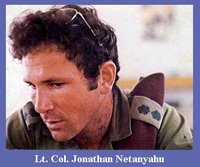 The feeling in the aftermath of the operation in which team leader Yoni Netanyahu had been killed was described in a Jerusalem Post feature as being mixed; “...Early the next day, Sayeret Matkal attended with thousands of others, Yoni Netanyahu’s funeral. The state was in a rare moment of simultaneous elation and mourning.”
A couple of weeks ago I went to a wedding of an Israeli friend of mine from my year off called Elad. It was a real Israeli wedding – the hall was in a place I had never heard of (somewhere near Bet Lid), no one wore a suit, lots of people ate and spoke during the ceremony and the photographers got way too close to the couple under the chuppah…
Quite a few friends from yeshiva were there; Roi, Dov, Hed, Adiel, Shlomi, Ori; some with wives, some without. Amongst those I hadn’t seen for a while was someone I used to play football with during lunch time, Yoni Ashchar. After returning from a trip abroad, Yoni had suddenly collapsed whilst playing basketball and fell unconscious for a few minutes. He is making unbelievable progress but no one knows what sort of final recovery he will make. Another guest at the wedding from our year in Ein Tzurim had lost a brother in a army training accident. In addition, the parents of our friend Danny Cohen who was killed whilst on service in the IDF also came. (Like Gilad Shalit, Danny also had an uncle who was killed in the Yom Kippur War.)
And as I found myself the sole Brit amongst Israelis, I wondered whether my peers at Ein Tzurim were actually in some way representative of Israeli society at large. Because from amongst those who I shared good times and bad throughout our 8 months on a small yeshiva and kibbutz near Ashkelon, one is no longer with us. And from those that are, many carry either physical or emotional wounds from their experiences in this State of ours.
And I started to think that perhaps being in a state of ‘simultaneous elation and mourning’ as the Jerusalem Post described is perhaps not as rare as we may have thought. Because even at the height of joy, there is always something missing, somebody who should be there but isn’t. Even at our happiest moments we remember Jerusalem’s destruction; even at a wedding we can’t ignore those who will never wed. Even Entebbe had its price.
And maybe that’s what being in this country is supposed to be about…never being absolutely complete, but going on and rejoicing nevertheless.
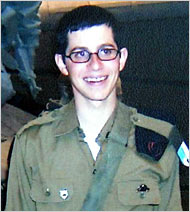 What will happen to Gilad no one yet knows, with some experts saying that staging a rescue operation is even more complicated than that carried out 30 years ago in Uganda. Yet in a week where Kassam rockets hit Ashkelon for the first time, and Israel buried its first casualty since the Gaza incursion, I couldn’t help but be nostalgic for the aftermath of Entebbe, even if its results dictated the emotionally difficult balance of simultaneous rejoicing and mourning.
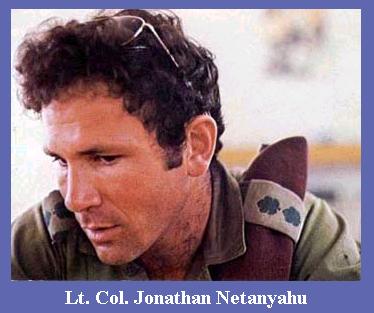 The feeling in the aftermath of the operation in which team leader Yoni Netanyahu had been killed was described in a Jerusalem Post feature as being mixed; “...Early the next day, Sayeret Matkal attended with thousands of others, Yoni Netanyahu’s funeral. The state was in a rare moment of simultaneous elation and mourning.”
A couple of weeks ago I went to a wedding of an Israeli friend of mine from my year off called Elad. It was a real Israeli wedding – the hall was in a place I had never heard of (somewhere near Bet Lid), no one wore a suit, lots of people ate and spoke during the ceremony and the photographers got way too close to the couple under the chuppah…
Quite a few friends from yeshiva were there; Roi, Dov, Hed, Adiel, Shlomi, Ori; some with wives, some without. Amongst those I hadn’t seen for a while was someone I used to play football with during lunch time, Yoni Ashchar. After returning from a trip abroad, Yoni had suddenly collapsed whilst playing basketball and fell unconscious for a few minutes. He is making unbelievable progress but no one knows what sort of final recovery he will make. Another guest at the wedding from our year in Ein Tzurim had lost a brother in a army training accident. In addition, the parents of our friend Danny Cohen who was killed whilst on service in the IDF also came. (Like Gilad Shalit, Danny also had an uncle who was killed in the Yom Kippur War.)
And as I found myself the sole Brit amongst Israelis, I wondered whether my peers at Ein Tzurim were actually in some way representative of Israeli society at large. Because from amongst those who I shared good times and bad throughout our 8 months on a small yeshiva and kibbutz near Ashkelon, one is no longer with us. And from those that are, many carry either physical or emotional wounds from their experiences in this State of ours.
And I started to think that perhaps being in a state of ‘simultaneous elation and mourning’ as the Jerusalem Post described is perhaps not as rare as we may have thought. Because even at the height of joy, there is always something missing, somebody who should be there but isn’t. Even at our happiest moments we remember Jerusalem’s destruction; even at a wedding we can’t ignore those who will never wed. Even Entebbe had its price.
And maybe that’s what being in this country is supposed to be about…never being absolutely complete, but going on and rejoicing nevertheless.
 What will happen to Gilad no one yet knows, with some experts saying that staging a rescue operation is even more complicated than that carried out 30 years ago in Uganda. Yet in a week where Kassam rockets hit Ashkelon for the first time, and Israel buried its first casualty since the Gaza incursion, I couldn’t help but be nostalgic for the aftermath of Entebbe, even if its results dictated the emotionally difficult balance of simultaneous rejoicing and mourning.
Subscribe to:
Posts (Atom)